In February 2021, with colleagues from Massey University, I presented ‘It’s complicated: Reflections on Teaching Citizenship in Aotearoa New Zealand’ at the Settler Responsibilities Towards Decolonisation International Symposium at the University of Auckland.
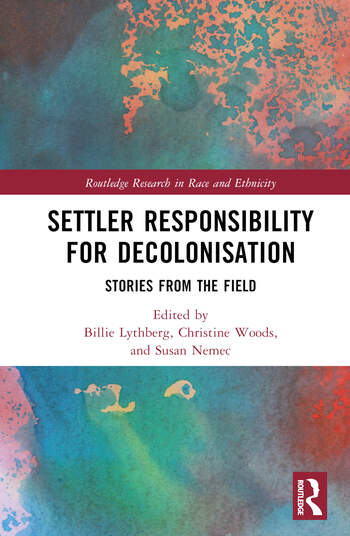
Three and a half years later the presentations and discussions from that symposium have been published in book form as Settler Responsibility for Decolonisation: Stories from the Field. As noted in the preface, contributors to the book:
…delve into these themes, offering primarily non-indigenous (they use the term ‘settler’) perspectives on decolonisation in New Zealand (Aotearoa), Australia, Hawai‘i (United States), and Canada. Contributors explore their personal and professional responsibilities within academia, education, therapy, and cultural work. The book does not explore how Indigenous peoples engage in decolonisation work independently of settler collaborators (e.g. see Smith & Smith, 2019); rather, the authors critically examine their motives and positionalities and argue that supportive actions from settlers can facilitate work that is Indigenous-driven.
The chapter I contributed to (with my amazing colleagues Giles Dodson, Ella Kahu, Carol Neill and Richard Shaw) reflects on teaching in a suite of compulsory core courses that were introduced in 2016 and connected via an emphasis on citizenship. We discuss the process of developing and teaching this course as a group of primarily settler (Pākehā) academics in conversation with Māori colleagues, and on our own learning through teaching. To do this we draw from scholarly literature on citizenship, our experiences teaching these courses, and from research undertaken on the teaching of global citizenship in the core to interrogate our roles and responsibilities as academics in relation to decolonisation.
The book was published after I was made redundant from my role at Massey, and the future of the core citizenship courses is uncertain. But this chapter, along with the Tū Rangaranga book stand as testimony to the work done.
Thanks Billie Lythberg, Christine Woods and Susan Nemec for the opportunity to participate in the symposium and to contribute to the book.
 Dr Sharon McLennan
Leave a comment